Wednesday, December 10, 2014

Getting Creative on a Budget

            Today was the last lab for AEE 412. While I was somewhat sad that lab was over and the semester is winding down, today’s Creativity Lab definitely cheered me up! The lab was supposed to be a surprise but I already knew what it was from students in last year’s cohort. This didn’t make it any less interesting though. For this particular lab, we were instructed to bring a unit plan to class and a creative mind set.

            At the beginning of lab, Ms. Rice described what would be happening for lab. She explained that we would be going to the local Dollar Tree where we would each have a budget of $5. Our task was to buy items to enhance and use in one or several of our lessons for the particular unit plan that we bought to class. I brought the earth’s water resources unit plan for my aquatic resources class. I originally intended to buy items to use with the lesson about the water cycle I would be teaching in the first week. Once I arrived at the store and began shopping, that idea changed.

            I ended up buying items for the Pennsylvania aquatic life unit that I will be teaching later in my aquatic resources class. I ended up buying items to use in two different lessons as well. For a lesson I will be teaching about classifying PA aquatic life, I bought a set of plastic insects. Students can identify the insects and classify them accordingly. For the lesson I will be teaching on wetlands, I bought a plastic boat, a sponge, raffia, and straws. These items will be useful for the lesson because it is based off of the wetland metaphors lesson from Project Wild: Aquatic. Students will select an item and talk about how the item describes or relates to one of the functions of a wetland.
 

            Overall, this was a great lab and really got the creative gears turning! I was able to find my items without the assistance of peers but was glad to help some of peers who were struggling. This was also a fun way to get away from all of the stress of the end of the semester for an hour. I definitely plan on using these items, along with numerous others, when student teaching. I think that these enhanced, creative lessons are more fun for both the teacher and the students. This type of lesson allows students to think in depth while expressing their ideas in a more creative manner!

Goodbye Semester of Boom...Hello Student Teaching!

          It is hard to believe that the fall semester of my senior year is coming to a close and in a few short weeks, I will begin student teaching at Elizabethtown! Looking back on the semester, it has definitely been quite an adventure. I experienced many laughs, tears, struggles, rewards, and arguably most important: personal growth. Coming into the semester, I knew the workload would be crazy. I knew I would question if I truly wanted to be an agricultural educator. I also knew that I would probably have a few break downs. But there was one thing that I didn’t know…the professional, pre-service agricultural educator I would start to become.

           Looking back at the last 15 weeks, I have definitely grown, developed, and matured in all aspects of my life. My parents have noticed positive changes in my from the way I dress to the way I speak to the way I present myself. I have all of my core agricultural education classes and experiences to thank for that. One of the biggest reasons for these positive changes is due to my participation in AEE 412 Methods of Teaching Agriculture lab. On the first day of lab, I remember I was so nervous and shaky to present a five minute reflective teaching lab in front of five of my fellow student teachers! By the time I carried out my final lab, the Life Knowledge lesson at my cooperating center, I wasn’t even nervous! I taught that lesson in front of my cooperating teacher too!

           AEE 412 lab was a positive experience overall. Despite the use of role playing cards to simulate an actual classroom, it was hard to make the lab section feel like an actual high school classroom. I know that resources are limited and we have to work with what is available. That being said, I greatly appreciate the feedback from the lab instructor and my peers. If possible, I think it would be so much more beneficial to conduct labs in an actual classroom; micro-teaching was an awesome experience because of this! I also thought about the possibility of having high school agricultural teachers bring students to Penn State for a day and allowing student teachers to teach the students on campus as a potential lab.
 
           As far as what I wish would have been discussed more in depth for a better understanding in lab, I would have to say I wish we discussed how to “actually teach.” We talked about many methods of teaching throughout the semester and had the opportunity to demonstrate the methods. However, we were just given an assignment for our first lab and thrown into it. I just feel that a lot of the feedback my classmates and I received would have been beneficial to hear before we began teaching in lab.

             Looking back on the semester, I know that I have definitely become a more reflective learner/teacher. After classes, and especially after labs, I would pull out a notebook that I always carry with me and jot down thoughts. I found that reflecting directly after the event or experience is most beneficial for me. Writing down notes, thoughts, and ideas directly after the fact helps me process what just occurred, what went well, and what areas I need to improve. I found myself enjoying writing reflective blogs after lab. Even though I had rough time watching some of my labs through thereNow, it turned out to be very impactful when it came to reflecting upon the experience. During events that occurred later in the semester, I was always the first person to encourage and initiate reflection. I made sure the van I rode home in from National Convention reflected on the trip as well as the group I worked with during micro-teaching!

             Overall, I know I will continue to incorporate reflection into my future experiences, especially during student teaching. I plan to personally reflect every day while reflecting with my cooperating teaching several times a week. Incorporating reflection into my preparation, teaching, and learning in the future will definitely make me a better educator. I will have a better understanding of what worked well for my students and myself as well as identifying areas of which to improve. Reflection will continue to help grow into a better educator and into a better individual overall. I will continue to reflect on all areas of my life: personal and professional.

             No matter where life takes me in a few short months after graduation, I will never forget the important lessons from this semester, relationships I have built, and skills I have gained. This semester has been everything I imagined and then some. It is hard to believe that my time in Happy Valley is winding down but I am ready for the next part of my life. I am ready to be in front of a classroom in Elizabethtown, changing the lives of students! I’m still figuring out who I am, where I’m supposed to be, and what I’m supposed to do but after everything I have been through this semester, I can honestly say that I have a better idea.

Please watch my final lab reflection video here!: https://www.youtube.com/watch?v=FEDGIZQfLsQ

Tuesday, November 25, 2014

Life Knowledge Lessons: Leaving an Impression!

          On Tuesday November 25th, I spent the day at Elizabethtown High School with my cooperating teacher Mr. Anderson. It was the last day of school before Thanksgiving break and the school day was only a half day. I observed his first period ag mechanics class, taught an FFA Life Knowledge lesson in his intro to agriculture class second period, worked with him on student teaching preparation third period during his flex period, and observed his fourth period aquatics class. I had a great day observing, teaching, and catching up with Mr. Anderson! Saying that I am excited for student teaching in January is an understatement!

         I taught the Life Knowledge lesson number 29 Valuing My Contributions. The lesson described what a contribution is, allowed students to provide examples of how they can contribute to their school, family, and community, and create contribution goals to work towards in the future. I chose this lesson because I think it is important for individuals to positively contribute and impact their school, family, and local community. I wanted to try to open the eyes of my future students and help them realize there is so much more to the world around them. I also felt that this lesson ties in nicely with FFA and community service.

          I started off the lesson by handing out a piece of candy to each student as part of my interest approach. I instructed students not to eat the candy until I told them to do so. I asked students how they felt when they received the candy and then how they felt once they were allowed to eat the candy. This led into the beginning of the lesson: defining a contribution. I discussed this with the students and then asked them to provide examples of how they can positively contribute to their school, family, and community. Students were then assigned to groups of three and had to draw four more examples of ways they can contribute to each of the three categories. Students presented their posters afterwards. To finish up class, students had to write one short term and one long term goal on the back of the poster pertaining to making positive contributions in their lives.

     
   I thought that the lesson went well overall! I tried to improve the lesson and make it more interactive and engaging for the students. I think the use of candy at the beginning of the lesson worked really well to get their attention and capture their interest for the class. I wasn’t nervous teaching to a group of students I had never met, nor was I nervous to teach in front of Mr. Anderson. This was a great feat for me because I’m usually very nervous before teaching! I also walked around the room as students worked and interacted with each group. I was warm and friendly throughout the lesson and tried to be enthusiastic as well!

        That being said, I still have a few things to work on as I enter my student teaching experience. I need to continue to improve my classroom management skills. The class was well behaved overall, it was somewhat difficult for me to get their attention as they worked because they were chatty. I think part of that was because it was a half day and their last day of school before Thanksgiving break. I also need to continue to pose questions to students to encourage them to think. I did a decent amount of this during today’s lesson but looking back, I know I could have posed more “why” and “how” questions. I also need to make sure my directions are clear and students understand what they are supposed to do.


         Overall, teaching this Life Knowledge lesson was a great opportunity for me to get to know some of my future students as well as continue to improve my teaching abilities. I also had the opportunity to continue determining my strengths and areas to improve upon. I was very thankful for all of Mr. Anderson’s support, suggestions, and advice. He was honest, open, and provided thoughtful, encouraging feedback. Teaching this lesson and being back in the classroom at Elizabethtown has me so eager to student teach in January! This was just another awesome reminder of my passion for agriculture and my desire to positively impact students through agricultural education!

Sunday, November 23, 2014

Making Sure I Maintain Classroom Management!

            Wow! It’s hard to believe the semester is just about over and in about one month, I will officially begin my journey as a student teacher at Elizabethtown! This semester has flown by! As I began reading for my last weekly writing, I found the subject to be appropriate and critical, especially because I will soon be entering the classroom. I also feel that it is something many student teachers struggle with…classroom management. I was exposed to a minimal amount of this during my micro-teaching experience. Some of the boys in the back of the classroom were talkative as I was teaching. I found that proximity control, simply walking around the classroom as I taught, got the boys to straighten up and quit talking while I was teaching.

          One of the most important concepts that have been stressed by my professors this semester is to establish classroom expectations, procedures, and consequences on the first day. I have created three corresponding posters with my protocols on them to use during student teaching. I also plan to create a seating chart for the first few weeks. The seating chart will help me learn names as well manage my classroom more effectively. While I am generally an easy person to get along with, I want to stress to my students that misbehavior will not be tolerated. If students follow the rules set in place and maintain good behavior, my classes will run smoothly and learning will be more enjoyable for everyone!

          One main idea that Newcomb states in Methods of Teaching Agriculture is that classroom atmospheres are created and evolved. Good classroom management comes with practice and implementation. I know that as a student teacher, and even as a beginning teacher, I will experience some issues of student misbehavior. I will learn how to deal with situations as they arise. Like the old saying goes, practice makes perfect. One thing I can do to ensure my classroom management skills start off on the right foot is to firmly implement my expectations, procedures, and consequences on the first day.

           Another thing I can do to improve and maintain classroom management is to keep students interested in engaged. When students are generally uninterested in subject matter or disengaged from the material, they tend to behave in an undesirable way. This was evident through my micro-teaching experience as well. My students became bored with PowerPoint presentations and worksheets. They were excited to create posters and practice using turkey calls, which is understandable. I know that some class days will have more variety than others, and some content will be more interesting than other days. However, I must ensure to keep students engaged and interested in my classes to the best of my ability.

            As I look ahead to the near future of student teaching, I am not generally worried about classroom management. I will start out strong and firm with my students and make sure we are both on the same page when it comes to proper behavior. I must show confidence when I teach, address issues directly as they arise, be attentive, and learn to forgive and forget. I am certain that at some point in time, I will come across issues with student misbehavior. While I will get better at resolving issues as they arise, I feel adequately prepared at the moment. Role playing by fellow students in lab, micro teaching, and discussions about classroom management in my methods course have prepared me for the real thing. I will continue to read and learn more about how to best manage classroom behavior as my student teaching experience nears!

Wednesday, November 19, 2014

Micro-Teaching Produced Mega Results!

             I don’t even know where to begin when describing my micro-teaching experience the last three days other than amazing! In these three short days, I feel like I have gained so much confidence, insight, and understanding of what it truly means to be an agricultural educator! Not only did I have great time teaching one period for three days in a row, I was given so much crucial and important feedback from two of my fellow student teachers and a high school agriscience teacher in Juniata County, Pennsylvania. I feel like I have grown so much as a young pre-service teacher these last three days. Was the overall experience flawless? My gosh no! There were some “rough patches” along the way but I learned from them and continued on my journey as an upcoming student teacher!

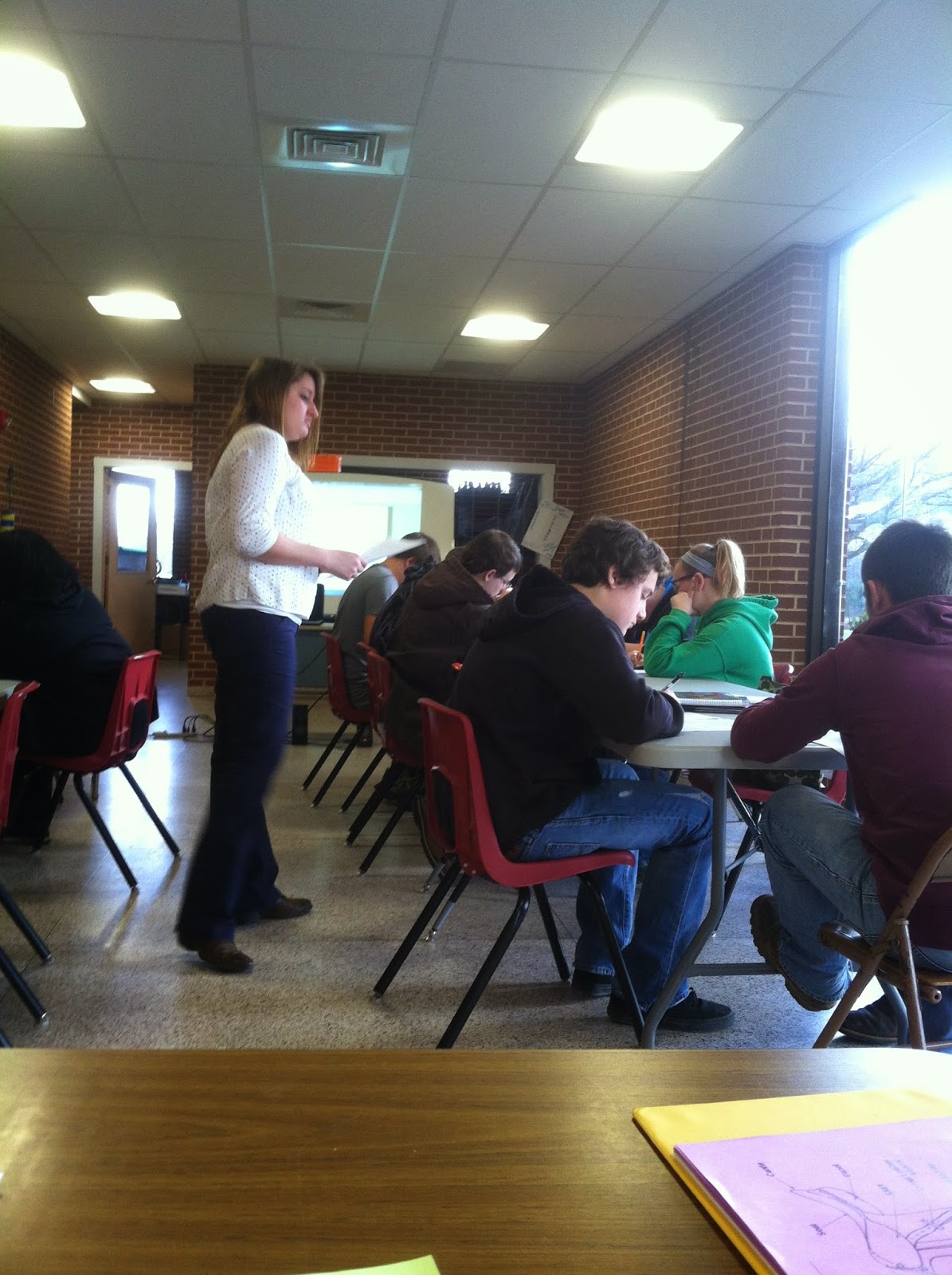
            Ms. Hannah Harris, Mr. Toby Neal, and I traveled to East Juniata High School in Juniata County, Pennsylvania to micro-teach in three of Mrs. Courtney Booher’s agriscience classes over the last three days. Prior to actually micro-teaching, we had to select a group of three, choose one of the approved cooperating high schools, select a class, topic, and prepare three lessons. I chose to teach Mrs. Booher’s third period wildlife and fisheries science class which had twelve students enrolled. I prepared my three day unit on the Eastern Turkey. The class periods were 43 minutes long, almost double the 84 minute periods I am planning for student teaching in the spring. Our first observational visit occurred on Friday November 14th and we began teaching the following Monday.

             On Monday, I prepared my lesson on basic turkey anatomy and characteristics. I prepared a short PowerPoint, had students complete a short parts identification worksheet that I went over with them in class, and then let them practice using turkey calls for the remainder of class. I thought the first day went fairly well but there is always room for improvement. I was somewhat nervous as it was my first time actually teaching in front of a classroom. I talked too fast as I went over the
information in my PowerPoint. This was noted in my feedback from Mrs. Booher. She also suggested that I explain why the bellwork was used and use it to lead into the lesson. Some other feedback included using proximity control when teaching and moving throughout the room. Mrs. Booher as well as my peers noted that it was evident that I know the material; I just need to be confident when teaching it!

            I feel that Tuesday was by far my best day micro-teaching. My lesson was about the lifecyle and breeding season of turkeys. I started off class with another short PowerPoint. I then had students complete a worksheet answering questions about turkey breeding seasons and life cycles. Afterwards, I had students create a poster summarizing the lifecycle of a turkey in at least four steps. I chose several students to stand up and explain their poster as class time was winding down. I was surprised by this activity because some of the boys in the back who I thought weren’t paying attention ending up having some of the most accurate and creative posters! My feedback for this day was much better. I took Mrs. Booher’s advice from Monday and put it to use: I walked around the classroom as I taught; I interacted with students as they worked, and overall I was more confident. She suggested posing more questions in class and speaking louder when instructing.

           Wednesday’s lesson was not my personal best. The lesson started off on the wrong foot as the video camera failed to record properly. I started teaching and a few minutes into my presentation, realized I forgot to have my students complete bellwork. This threw me off and I let it get the best of me. After I was done teaching, I had students complete a summarizing quiz on information I taught to them over the last three days. A few minutes into the quiz, I allowed students to use their notes as a reward for taking good notes and following directions. Students completed a learner satisfaction form which provided me feedback as I prepare for student teaching. To finish out class, I had students create hand turkeys and write down three things they were thankful for since Thanksgiving is next
week. I planned too much time for students to take the quiz in my lesson plan, which required me to think on my feet; this is where the hand turkey idea came in. Some feedback I was provided included variety in my lessons, working on timing as I teach and prepare lessons, and continue to use questioning as I teach.

             Overall, micro-teaching was an amazing experience that provided me with so much critical feedback! This experience has proved to me that I made the right decision by following my heart and choosing to become an agricultural educator. I have learned that I put entirely too much pressure on myself and things go so much more smoothly when I am confident. I took the suggestions and feedback provided to me and used it the following day. By the last day of micro teaching, I was walking around the room, teaching without relying on the PowerPoint, and asking good transition questions to my students. That being said, I believe there is always room for improvement. I need to work on timing as I prepare lessons, talk slower as I present information, and just let my warm personality shine through as I teach. This experience has truly been impactful and I cannot wait to student teach in January!

Wednesday, November 12, 2014

From Oreos to Oil Spills: Putting My Knowledge of Inquiry Instruction to Use

             This week in lab proved to be a challenge as I had to teach an inquiry based lesson. I was really excited for this lab because I felt very prepared. I attended a seven hour workshop sponsored by NAAE and Du-Pont at FFA National Convention this year. The workshop was all about inquiry based instruction: what it is, how it can be performed, and examples of lessons to use in the classroom. Last week, our methods class took a field trip to Greenwood High School in Millerstown, Pa to watch two National Agriscience Ambassadors use inquiry instruction in their classes. We also discussed inquiry instruction in class along with having a guest presenter provide more in depth detail about inquiry and how to incorporate it into student teaching. I also had what I personally thought was a great inquiry lesson for lab. Needless to say, I felt very prepared!

         I based my inquiry lesson on pollution, focusing on oil spills, which is a topic I will be teaching in my aquatic resources class this spring. I provided a brief introduction through PowerPoint to start off class. I then led students into determining how to clean up a smaller scale oil spill by simulating an oil spill in a plastic container with water and oil. My lab peers were exposed to several different items they could use to try to soak up oil: dry dirt, cat litter, a sponge, and stall shavings. Students were provided a sheet to form a hypothesis, collet data, and formulate conclusions. Students also had scales to use if needed.

One thing I think that worked really well for this lab was the actual content of the lab. It was very inquiry based and had my lab peers asking questions and trying new methods to determine which material was best to clean up oil. I was also confident when presenting this lab. It was the first lab I performed where I did not get myself worked up and wasn’t nervous! I know we are three quarters of the way through the semester but I see it as a big improvement! I also thought that my lesson was well prepared and I generated a lot of questions to ask students as they worked.

          There were also some points for improvement in this lab however. I think in the beginning of lab, I should have let students pose questions to answer rather than give them as much guidance as I did. I should have allowed them to determine what exactly they would be solving rather than pretty much tell them to determine which material worked best to soak up the most oil. I also should have asked more questions as students worked. I create numerous questions in my lesson plan but didn’t end up asking many of them. I also should have taken advantage of the fact that I wasn’t nervous and put more passion and energy into my lesson!

           After my lab, my peers and I had a great discussion going. My peers wanted to know which material provided worked the best. We also generated questions I can ask my students when I teach this lesson during student teaching. Some of these questions included “Can you separate oil and water?” “How can you measure how much oil was soaked up?” “Why do certain materials work better to soak up oil?” I also explained how I envisioned students ultimately completing the lab: measuring the weight of a material before and after it was soaked in the oil to determine how saturated the material was. One of my peers thought of this method during lab which was encouraging to see. However, more time would be needed to carry out this method.

            Overall, I think this was one of my better lab performances! I was very excited to see my peers working hard to figure out which material worked better to soak up the most oil. I was also very pleased with all of the discussion after lab and the feedback I was provided. It was encouraging to see the anxiousness of my peers as they wanted to know the answer to the lab. I hope this occurs when I student teach. With a few adjustments and improvements, I think this lab will be ready to use during student teaching and will have an awesome outcome!

Monday, November 10, 2014

Experiencing FFA National Convention with a New Perspective!

        During FFA National Convention in Louisville, Kentucky two weeks ago, I had an assignment as part of my AEE 295 course. This third “Multicultural Moment” involved observing the behavior of individuals at convention and writing a description of these observations every day for a week. I began observing on Monday October 27th and completed my observations on Friday October 31st. As directed, we were supposed to observe interesting, positive, and negative behavior and actions of others. Overall, convention was a great experience and I learned so much from observing others. I also learned a lot about the person I am and the person I want to become!

           On Monday, the night before leaving for convention, I was shopping at Giant in State College. I blatantly watched a man cut off a woman as they both entered the store. The man wasn’t paying attention and I personally do not think he saw the woman. The woman gasped after the incident and seemed angry. From this small interaction, I realized that people need to be more considerate and pay attention to their surroundings.

           On Tuesday, I had an early start to my morning. I departed for Louisville from campus at 5:15am. We drove for five and a half hours before stopping for a late breakfast/early lunch in Ohio at Cracker Barrel. After we finished eating, everyone walked to the front of the restaurant to pay. As I got up, I noticed a woman walking back to her table. An older waitress was cleaning up the table. The customer thanked the waitress, handed her a tip, and explained that she was such a pleasant waitress and made her dining experience enjoyable. The waitress smiled very big, blushed, and thanked the customer. This made me very happy and was one of the most uplifting experiences I witnessed all week. It was reassuring to see that some individuals are still polite and courteous in today’s society.

           Wednesday evening of that week consisted of the Alpha Tau Alpha banquet and presentations. Representatives from agricultural colleges across the country were presenting Program of Excellence presentations. I noticed that students from opposing or rival schools were not paying attention to other presentations. Students were talking or were on their phones. I thought this was rude and disrespectful. I am guilty of this as well and felt very awful afterwards. This was the most depressing experience I observed all week. I made sure to keep my phone away during banquets and meetings the rest of the week.

               The most interesting event I experienced all week took place on Thursday afternoon. I waited in line for 45 minutes at the food court in the convention center during lunch. Behind me in line were a girl from Montana and several students from Michigan. The FFA member from Montana was from an Indian reservation in Montana. She was telling the Michigan FFA members about life on the “res.” The conversation lasted the entire 45 minutes with many questions from the Michigan FFA members. I found it encouraging that the students were interested in another culture. I was happy to hear their general interest in each other and how positive their interaction was!

Friday afternoon proved to be another fairly positive experience as well. I walked around the career fair and gathered resource materials to use in my future classroom. I observed how welcoming and talkative certain exhibitors were to students. Some of the individuals manning booths such as Stihl, Purina, and Tractor Supply were very friendly. They walked in front of their booths and made an effort to talk to students. On the other hand, some individuals, especially those manning college booths, were not inviting. They played on their phones and didn’t greet students as they walked past. It made me reflect on my presence, whether in the Penn State booth or in the front of the classroom. It also encouraged me to let my warm, friendly personality shine through!